THE INNER WORKINGS OF SPIRALS
A Co-Created Study Paper
by Martin Kutternik
An exploration of the deeper functions of spirals – in nature, subtle energy and technology.
Martin Kutternik is thedesigner of the current AQUA-VORTEX™, engineer and independent holistic researcher
35+ years exploring and working with subtle-energy approaches and Co-Creative Science.
What is really happening when we work with a spiral?
Spiral and helical forms appear throughout nature – in water, plants, shells, weather systems, galaxies and even the double helix of DNA.
But what if the spiral is more than simply a beautiful shape?
The Inner Workings of Spirals presents a co-created understanding of the spiral as one of nature’s highly versatile tools – with functions that may extend far beyond what is visible to our normal senses.
The four key functions of spirals
At the heart of the paper are four proposed functions. Individually they are intriguing. Combined, they offer a very different way of understanding the spiral.
1. Gateway A spiral may act as a multidimensional gateway – opening a connection between different dimensions or realities.
2. Pathway A spiral can function as a pathway from one place to another, allowing an exchange of form, energy or information.
3. Information Store A spiral may hold information about its purpose – rather like a programme that continues to perform a particular function.
4. Translator A spiral may translate, reorganise, accelerate or decelerate information and energy between different levels of reality.
“The spiral is a vastly versatile key in nature’s toolbox.”
~ The Inner Workings of Spirals
More than a visible shape
The paper distinguishes between spirals that exist in visible physical form and spirals that exist only as energetic form beyond our normal five senses.
In this co-created understanding, the essential functions of a spiral do not depend solely on whether we can see it. Physical spirals can, however, make those functions more practical and reliable for human applications.
The shape matters
Not every spiral necessarily does the same thing.
The paper proposes that a spiral’s shape, dimensions, direction and other characteristics can be critical to the particular function it performs.
Material may also influence the overall effect, even if the four fundamental functions arise primarily from the spiral form itself.
Why does nature use spirals so often?
The spiral occurs again and again throughout the natural world.
The paper proposes that this is not accidental: the combination of gateway, pathway, information and translation functions makes the spiral extraordinarily versatile.
This may also help explain why humans have been drawn to spiral forms throughout history – in art, decoration, symbolism and technology – often without consciously understanding why the shape feels so compelling.
What might become possible if we understood the spiral more fully?
The paper suggests that a deeper understanding of spirals could open new possibilities in technology, health, agriculture, art and our wider understanding of reality.
A powerful tool – and a responsibility
The paper also carries an important caution: powerful tools can be used constructively or destructively.
For that reason, it places particular emphasis on working with spiral technology in conscious partnership with nature, rather than approaching it simply as another mechanism to manipulate.
What does “co-created” mean?
The paper was developed through the principles of Co-Creative Science – an approach that seeks to work consciously in partnership with nature’s intelligence.
It therefore presents a co-creative and subtle-energy understanding of spirals rather than claiming that the four functions described here are established findings of conventional science.
The paper is offered as exploration, observation and food for thought – inviting you to look at a familiar natural form with new eyes.
From theory to application – the AQUA-VORTEX™
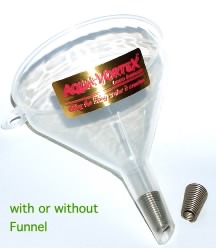
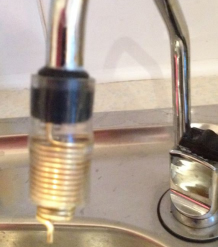
One practical application of these ideas is the AQUA-VORTEX™ Liquid Energizer.
In our understanding, it is not merely the fact that the device looks like a spiral that matters. Its particular shape, dimensions and form are intended to fulfil a specific purpose in relation to water.
Explore the AQUA-VORTEX™
About Martin Kutternik
Martin Kutternik
Designer of the current AQUA-VORTEX™, engineer and independent holistic researcher
35+ years exploring and working with subtle-energy approaches and Co-Creative Science
Martin has explored holistic and subtle-energy approaches since 1988, including flower essences, Perelandra Solutions and Co-Creative Science. His work with spiral form and the AQUA-VORTEX™ developed from this wider exploration of nature, subtle energy and practical technology.
Frequently asked questions about spirals and subtle energy
Why are spirals so common in nature?
Spiral forms occur throughout nature, from plants and shells to water, weather systems and galaxies. This paper proposes that their prevalence may relate to the spiral’s ability to combine several different functions within one form.
What are the four key functions of spirals?
The paper identifies four key functions: gateway, pathway, information store and translator.
What is spiral energy?
“Spiral energy” can mean different things in different traditions. In this paper, the focus is on a co-created subtle-energy understanding of how spiral form may interact with energy, information and different levels of reality.
Is this conventional scientific research?
No. This is explicitly a co-created study paper. It presents ideas developed through Co-Creative Science and subtle-energy exploration rather than claiming that these proposed functions have been established by conventional scientific research.
Does the material of a spiral matter?
The paper proposes that the four fundamental functions arise primarily from the spiral form, while the material used may influence or enhance other aspects of its effect.
Do all spirals have the same effect?
No. In the understanding presented here, shape, dimensions, direction and other aspects of a spiral are important in determining the function it can perform.
There is more to spirals than meets the eye.
The Inner Workings of Spirals invites you to look again.
The spiral is one of nature’s most familiar forms – and perhaps one of its least fully understood.



 My Cart